When Oral Medication Isn't Enough: Understanding the Move from Clomid to Injectable Gonadotropins
For millions of Americans pursuing parenthood through medical assistance, Clomid (clomiphene citrate) is the natural starting point. It is affordable, well-studied, and administered orally — a relatively gentle entry into fertility treatment. Yet for a meaningful subset of patients, there comes a moment when a specialist delivers news that feels both disappointing and, in some ways, necessary: it may be time to move beyond Clomid.
Transitioning to injectable gonadotropins is not a sign of failure. It is, instead, a carefully considered clinical decision — one that your care team does not make lightly. Understanding the reasoning behind this recommendation, along with what the shift actually involves, can transform an anxiety-provoking conversation into an empowering one.
What Does It Mean to "Plateau" on Clomid?
The term "Clomid plateau" refers to the point at which continued treatment with clomiphene citrate is unlikely to improve outcomes for a particular patient. This plateau can manifest in two primary ways.
The first is ovulatory failure, meaning the medication has not successfully triggered ovulation despite adequate dosing — typically up to 150 mg per cycle. The second, and perhaps more nuanced, is treatment futility: ovulation is occurring, but pregnancy has not resulted after three to six monitored cycles. Most reproductive endocrinologists consider six Clomid cycles the upper threshold before reassessing the treatment plan, and many recommend reevaluation as early as three to four unsuccessful cycles.
Beyond simple cycle count, specialists also evaluate the quality of a patient's response. If ultrasound monitoring reveals consistently thin uterine lining — a known side effect of Clomid's anti-estrogenic properties — or if follicle development is suboptimal, injectable medications may offer a more favorable physiological environment for conception.
Why Injectables Work Differently
Unlike Clomid, which works indirectly by blocking estrogen receptors and prompting the pituitary gland to produce more follicle-stimulating hormone (FSH), injectable gonadotropins deliver FSH (and sometimes luteinizing hormone, or LH) directly into the body. This direct stimulation gives clinicians far more precise control over the ovarian response.
This precision matters for several reasons. Patients who did not respond adequately to Clomid — a condition sometimes called "Clomid resistance" — often respond robustly to injectable FSH because the mechanism bypasses the step where Clomid's effectiveness breaks down. Additionally, because injectables do not carry the same anti-estrogenic effects, uterine lining quality frequently improves, potentially creating a more receptive environment for implantation.
Commonly used injectable gonadotropins in the United States include follitropin alfa (Gonal-F), follitropin beta (Follistim), and human menopausal gonadotropin, or hMG (Menopur). Each has a slightly different hormonal profile, and your specialist will select the most appropriate option based on your individual diagnosis and history.
Comparing Success Rates: What the Research Suggests
Clinical data consistently demonstrates that injectable gonadotropins, when used with intrauterine insemination (IUI), produce higher per-cycle pregnancy rates than Clomid-IUI protocols — particularly in patients with unexplained infertility or those who have already experienced Clomid treatment failure.
Studies have reported per-cycle pregnancy rates for Clomid-IUI combinations ranging from approximately 8 to 10 percent. Injectable gonadotropin-IUI protocols, by comparison, have demonstrated rates closer to 15 to 20 percent per cycle in appropriately selected patients. It is important to note, however, that success rates vary considerably based on age, diagnosis, ovarian reserve, and other individual factors. Your specialist is best positioned to offer personalized projections based on your complete clinical picture.
For patients with more complex diagnoses or those for whom IUI has also been unsuccessful, injectable protocols are often paired with in vitro fertilization (IVF) — a topic your care team will address if and when it becomes relevant to your path.
The Cost Conversation No One Wants to Skip
One of the most significant practical differences between Clomid and injectable gonadotropins is cost. Clomid is among the most affordable fertility medications available, frequently running between $30 and $100 per cycle with a generic prescription. Injectable gonadotropins, by contrast, can cost anywhere from $1,500 to $6,000 or more per cycle depending on dosage, brand, and pharmacy.
For many American families, this cost differential is a genuine obstacle. Health insurance coverage for injectable fertility medications varies dramatically by state and employer plan. It is worth contacting your insurance provider before beginning treatment to determine what, if anything, is covered. Several pharmaceutical manufacturers also offer patient assistance programs — your clinic's financial counselor or nurse coordinator can often help you identify and apply for these resources.
Some patients find that a single, well-managed injectable cycle — even at higher cost — is more cost-effective in the long run than continuing multiple Clomid cycles with diminishing returns. This is a calculation worth discussing openly with both your medical team and your financial advisor.
What to Expect When You Make the Switch
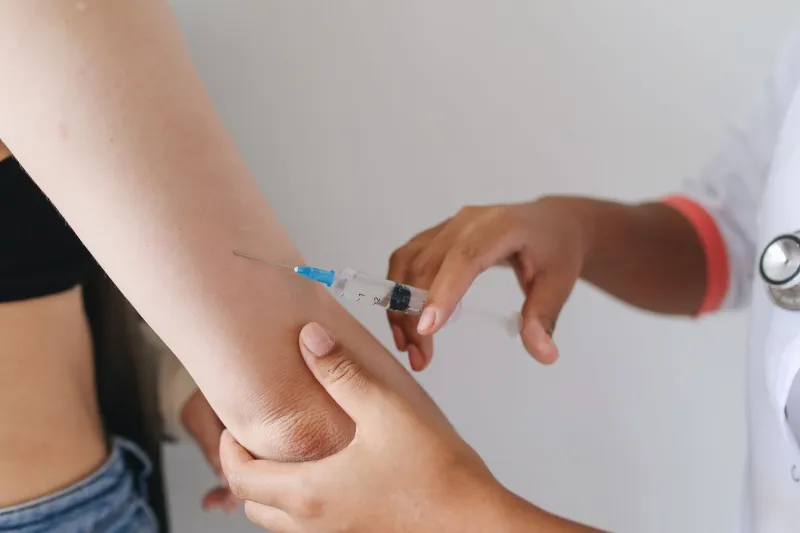
Transitioning to injectable gonadotropins involves a meaningfully different treatment experience. Rather than taking a daily pill, you will learn to self-administer subcutaneous injections — a prospect that understandably causes anxiety for many patients. Most clinics provide hands-on injection training, and the needles used are quite small; the majority of patients report that the process becomes manageable within a cycle or two.
Monitoring also intensifies. Whereas a Clomid cycle might involve one or two ultrasound appointments, injectable cycles typically require multiple monitoring visits — sometimes every one to two days near the peak of stimulation — to track follicle growth and adjust dosing in real time. This level of oversight is both a feature and a commitment; it demands flexibility in your schedule but also provides your care team with the data needed to optimize your response and minimize the risk of ovarian hyperstimulation syndrome (OHSS), a potential complication of aggressive stimulation.
Emotionally, the transition can feel like a threshold moment — a recognition that the path to parenthood is more complex than you initially hoped. Many patients describe a mixture of grief over leaving a simpler treatment behind and cautious optimism about the increased potency of the new approach. Both responses are entirely valid, and many fertility clinics can connect patients with counseling resources or peer support groups to help navigate this shift.
Having the Right Conversation with Your Specialist
If your fertility specialist has raised the possibility of moving to injectable medications — or if you are approaching your third or fourth Clomid cycle without success — it is reasonable to initiate this conversation proactively. Consider asking:
- What specific clinical factors are driving this recommendation for me?
- Would you recommend injectables with IUI, or are we also discussing IVF?
- What success rates can I realistically expect given my age and diagnosis?
- What monitoring will be required, and how will it affect my work schedule?
- What are the risks, including OHSS, and how will they be managed?
- What financial assistance options are available through your clinic or the medication manufacturers?
These questions are not challenges to your doctor's authority — they are the hallmarks of an engaged, informed patient. At FertilityPath, we believe that understanding your treatment is an essential part of pursuing it effectively.
A Step Forward, Not a Step Back
The decision to escalate from Clomid to injectable gonadotropins is, at its core, a medical team's commitment to your success. It reflects the understanding that fertility treatment is rarely linear, and that the most effective path forward is one that evolves alongside your body's responses and your family's needs.
If you find yourself standing at this particular crossroads, know that you are not alone — and that the road ahead, while more complex, carries with it renewed possibility.