From Waiting to Expecting: Five Women Share How Clomid Changed Their Fertility Story
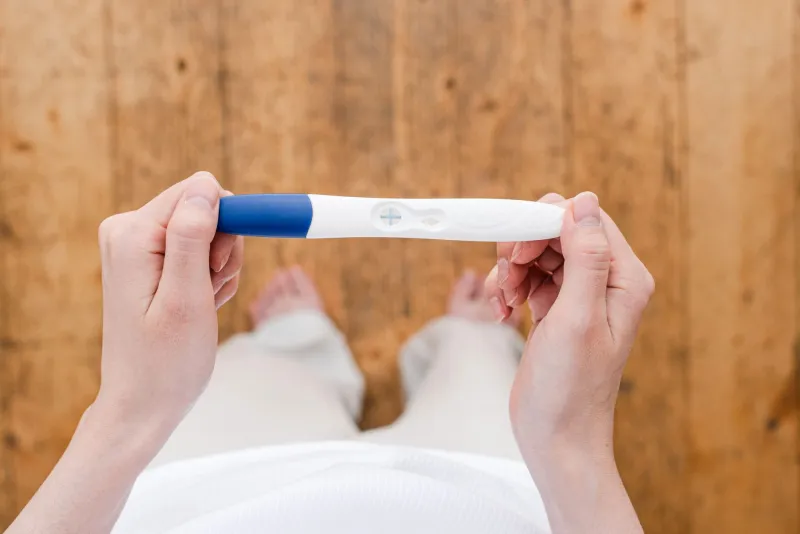
For millions of American women navigating unexplained infertility or irregular ovulation, Clomiphene citrate — commonly known as Clomid — has served as a pivotal first step on the road to pregnancy. Here, five women from across the United States open up about their diagnoses, their doubts, and the moments that changed everything. Their stories are candid, hopeful, and grounded in the reality of what fertility treatment truly demands.
"I Didn't Even Know My Cycles Were the Problem" — Renata, 31, Austin, Texas
Renata had been trying to conceive for fourteen months when her OB-GYN finally ordered a full hormonal panel. The results revealed what she had never suspected: her body was not ovulating consistently, a condition her doctor attributed to a mild form of polycystic ovary syndrome (PCOS).
"I thought I was doing everything right — tracking my basal body temperature, using ovulation predictor kits," she recalls. "But the kits were giving me false positives because of my elevated LH levels. I had no idea."
Her reproductive endocrinologist prescribed Clomid at a starting dose of 50 mg, taken on days three through seven of her cycle. The first month produced a confirmed ovulation via ultrasound monitoring. By her third cycle, Renata was pregnant.
"My biggest advice? Ask for ultrasound monitoring, not just blood work. Seeing that follicle grow on the screen made me feel like something was actually happening for the first time."
"The Emotional Side Nobody Warned Me About" — Deja, 28, Atlanta, Georgia
Deja was referred to a fertility specialist after two years of trying and a diagnosis of hypothalamic amenorrhea — a condition in which the brain fails to send the hormonal signals necessary for ovulation. For Deja, the physical challenge was compounded by an unexpected emotional weight.
"Clomid affected my mood in ways I wasn't prepared for," she says openly. "Hot flashes, irritability, and a kind of emotional rawness that made me feel like I was grieving and hoping at the same time."
Despite the side effects, Deja pushed through four cycles with close medical supervision. Her reproductive endocrinologist adjusted her dosage upward to 100 mg after the second cycle, when monitoring showed insufficient follicular development.
"Cycle four was the one. I still remember sitting in the parking lot of a CVS in Buckhead, staring at a positive test. I called my mother before I even drove home."
Deja now emphasizes the importance of mental health support during treatment. "I wish I had connected with a therapist who specialized in fertility much earlier. It would have made the hard months more manageable."
"We Had Unexplained Infertility — and That Was Its Own Kind of Frustrating" — Melissa and Tom, 34 and 36, Portland, Oregon
For Melissa and her husband Tom, the fertility workup returned results that were simultaneously reassuring and maddening: everything appeared normal. No blocked tubes. Normal sperm parameters. Regular cycles on paper — yet no pregnancy after eighteen months.
Her physician proposed a trial of Clomid combined with intrauterine insemination (IUI), a common protocol for unexplained infertility in the United States. The approach was designed to increase the number of mature eggs available during the cycle and pair that with optimally timed sperm placement.
"The first IUI was nerve-wracking. The two-week wait felt like two years," Melissa admits. "But the second IUI — that was it."
Melissa delivered a healthy baby girl nine months later. She is candid about what she would tell her earlier self: "Stop Googling success rates at two in the morning. Your story isn't a statistic. And communicate with your partner. Tom and I grew closer through this process because we made a point of talking honestly every single day."
"I Was 38 and Scared Time Was Running Out" — Priya, 39, Chicago, Illinois
Priya began her fertility journey later than she had planned, following a divorce in her mid-thirties and a second marriage at 37. When she and her husband began trying, she was acutely aware of the conversation around age-related fertility decline.
"Every article I read made me feel like I had already missed my window," she says. "My doctor was the first person who actually sat down with me and explained my specific numbers — my AMH, my antral follicle count — rather than just quoting general statistics at me."
Priya's ovarian reserve was described as "low-normal for her age," and her cycles, while regular, showed signs of a shortened luteal phase. Her reproductive endocrinologist prescribed Clomid at 50 mg to improve follicular recruitment and added progesterone supplementation to support implantation.
After two unsuccessful cycles, Priya's doctor adjusted the protocol, adding a trigger shot of human chorionic gonadotropin (hCG) to precisely time ovulation. The third cycle resulted in a confirmed pregnancy.
"My son was born three weeks before my fortieth birthday. Age matters — but it is not the only thing that matters. Find a doctor who sees you as an individual, not a demographic."
"I Almost Gave Up Before the Cycle That Worked" — Carmen, 33, Miami, Florida
Carmen's path to pregnancy included a prior miscarriage, a PCOS diagnosis, and five months of Clomid treatment before achieving a viable pregnancy. She is perhaps the most forthright of the women featured here about the moments when hope felt unreachable.
"After my miscarriage on cycle two, I told my husband I couldn't do it anymore," she says quietly. "I took a month off from all of it — no medications, no tracking, no appointments. I needed to grieve and then decide."
She returned to her reproductive endocrinologist with a renewed commitment and a request for more aggressive monitoring. Her team introduced cycle day 10 and 12 ultrasounds to track follicle size and adjusted her Clomid dose to 150 mg — the upper range typically prescribed.
"Cycle five produced two mature follicles. My doctor talked to us about the small risk of multiples. We understood and decided to move forward. Nine months later, I gave birth to one healthy baby girl."
Carmen's message to women in the middle of a difficult treatment cycle is direct: "Pausing is not quitting. Taking care of your emotional health is part of the medical process, even if nobody puts it in your chart."
What These Stories Reflect About Clomid Treatment in Practice
While each of these women followed a distinct path, several shared themes emerge from their experiences — themes that align closely with what reproductive specialists observe in clinical practice.
First, individualized dosing matters. Clomid is typically initiated at 50 mg, but many patients require adjustments based on ultrasound monitoring and hormonal response. A one-size protocol rarely serves every patient equally.
Second, monitoring enhances outcomes. Several women credited cycle monitoring — including transvaginal ultrasound and timed trigger injections — with making the difference between a cycle that produced no result and one that led to pregnancy.
Third, emotional support is a clinical necessity, not a luxury. The psychological toll of infertility treatment is well-documented, and each woman in this feature identified mental health resources, spousal communication, or personal coping strategies as essential components of their success.
Finally, realistic expectations coexist with genuine hope. Clomid is not a guaranteed solution, and success rates vary based on age, diagnosis, and individual physiology. However, for many women with ovulatory dysfunction or unexplained infertility, it represents a meaningful and accessible first intervention.
If you are considering Clomiphene citrate as part of your own fertility plan, the most important step remains an open, detailed conversation with a qualified reproductive specialist who can evaluate your specific circumstances and guide you toward the protocol most likely to support your path to parenthood.
The names and identifying details in this article have been changed to protect patient privacy. The experiences described are illustrative of common patient journeys and are not intended as medical advice.